Friday, February 19, 2016

Being Samuel Gray: Interpreting a Central Figure from the Boston Massacre (Part II)

Detail from the account of the funeral procession,
Boston Gazette and Country Journal,  March 12, 1770
Who was Samuel Gray? What evidence do we have for his family background, or any blood relationship to John Gray his employer? The only contemporaneous mention of another family member is found in the March 12, 1770 Boston Gazette and Country Journal account of Gray's funeral procession, above, which states that his brother was a Benjamin Gray who lived very near the Massacre site on what was then known as Royal-Exchange Lane.

There were several Gray families at this time Boston - a town of less than than 16,000 souls - and not all of them shared a common ancestor.  There are Boston marriage records from the 1750s and 1760s for a number of Grays, including some named Samuel, Benjamin and John.  There were also members of Gray families in neighboring communities who came to Boston in the 1770s.  One of these, Winthrop Gray of Lynn, became the owner in 1781 of the no-longer-Royal "Exchange" tavern on what is now Exchange Street.

Although Samuel Gray was claimed in the aftermath of the Massacre as one of the Town's own rather than a stranger, it is not easy to substantiate characterizations made about his Boston connections. The radical leader Samuel Adams, writing as "VINDEX" in a letter published in The Boston Gazette and Country Journal on December 31, 1770, claimed that "Mr. Gray was of a good family", but researchers have been unable to clearly connect him with the most prominent Grays of Boston.

It is known that Samuel Gray worked at John Gray's rope-walk.  He is alleged in loyalist accounts (and in John Adams summation in defense of the soldiers of the 29th Regiment)  to have been involved in brawling with British soldiers in the vicinity of the rope-walk just days before the Massacre. Captain Preston, who commanded the detachment of the 29th that ultimately fired on the crowd at the Massacre, confused Samuel Gray in his deposition with Gray's employer, stating that one of the three men shot dead was "Mr. Gray at whose rope-walk the prior quarrels took place."

While Samuel Gray's pedigree remains unconfirmed, much more is known about John Gray. He was the seventh and last child of the Edward Gray (1673 - 1757) and his first wife Susannah Harrison. Edward Gray was an immigrant success story, arriving in Boston as an apprentice rope maker in 1686. On his death in 1757 he left an estate valued at £5,500, including ten slaves and his own rope making business.  He left the rope-walks - seven hundred and forty-four feet in length, by twenty or more feet wide - to his son John by a will dated February 12, 1753 (witnessed by James Otis), which also included "a brick warehouse adjoining, with yarn houses, knotting house, dwelling house and land...valued at £1,000." 

John Gray was born in 1713, the year his mother died.  He married late in life and had no surviving issue.  His first wife was Mary Otis, daughter of James Otis, Sr. and sister of Mercy Otis Warren and James Otis, Jr.   John and Mary were married in Barnstable in 1761, but she died two years later.  Her husband had at least one mourning ring made in her memory, one of which is in the collections of the Massachusetts Historical Society, along with another for their newborn son John who predeceased Mary by two months.  The MHS also holds this striking portrait, below, made of her in 1763 by Copley.

Mary Otis Gray by John Singleton Copley, 1763 (MHS)

In addition to John Gray, Edward Gray had six other children by Susannah Harrison, including Harrison Gray, who became Receiver-General of Massachusetts and was a loyalist who ultimately left Boston in 1776.  Edward had five more children with his second wife, Hannah Ellis, who died in 1726.  One of the sons of Edward Gray and Hannah Ellis was named Benjamin, who married Mary Blanchard, a distant collateral relation of mine, in 1761. 

None of the children of Edward Gray in either marriage was named Samuel, and it does not appear to be a name used by this branch of the family.  It is extremely unlikely, then, that Samuel Gray was any relation to John Gray who owned the rope-walk.  There was a Samuel Gray in another Boston family who was in 1738 to Samuel and Sarah (Emmons) Gray, but he died in 1784.

As for the Benjamin Gray who lived "on the North side the Exchange", he too remains an enigma.  A Mr. Benjamin Gray was among four Collectors of Taxes elected during consecutive years at Boston Town Meetings from 1771-1774.   An audit of the Treasury in November, 1776 found that through March, 1775, £1,529 was still due from these Collectors of Taxes, including £345 from this Benjamin Gray.  The delinquent collector may have been the same man who was half brother to John Gray, or he may have been the individual who the Boston Gazette identified as the brother of Samuel Gray.  He cannot have been both, and he might be an entirely different man altogether. 

Until additional evidence comes to light, the best we can say with confidence about Samuel Gray is that he was a laborer at a rope-walk owned by John Gray but it is highly unlikely that they were related.  As for his "anti-occupation" activities prior to the Massacre, his journey to King-Street the night of March 5th,  and his actions before the soldiers fired, we will examine the evidence in subsequent posts in this series.


Thursday, February 11, 2016

Being Samuel Gray: Interpreting a Central Figure from the Boston Massacre (Part I)

"Building an event, even one that recreates an actual moment in the past, is as much as work of theatre or fiction as it is of fact: character development, motivations, costuming, setting, all of those combine with the documented words to create a scene that conveys an interpretive point for the public. It’s similar to a museum exhibition– it’s interpreted."  
                                                                                                         - "Kitty Calash"

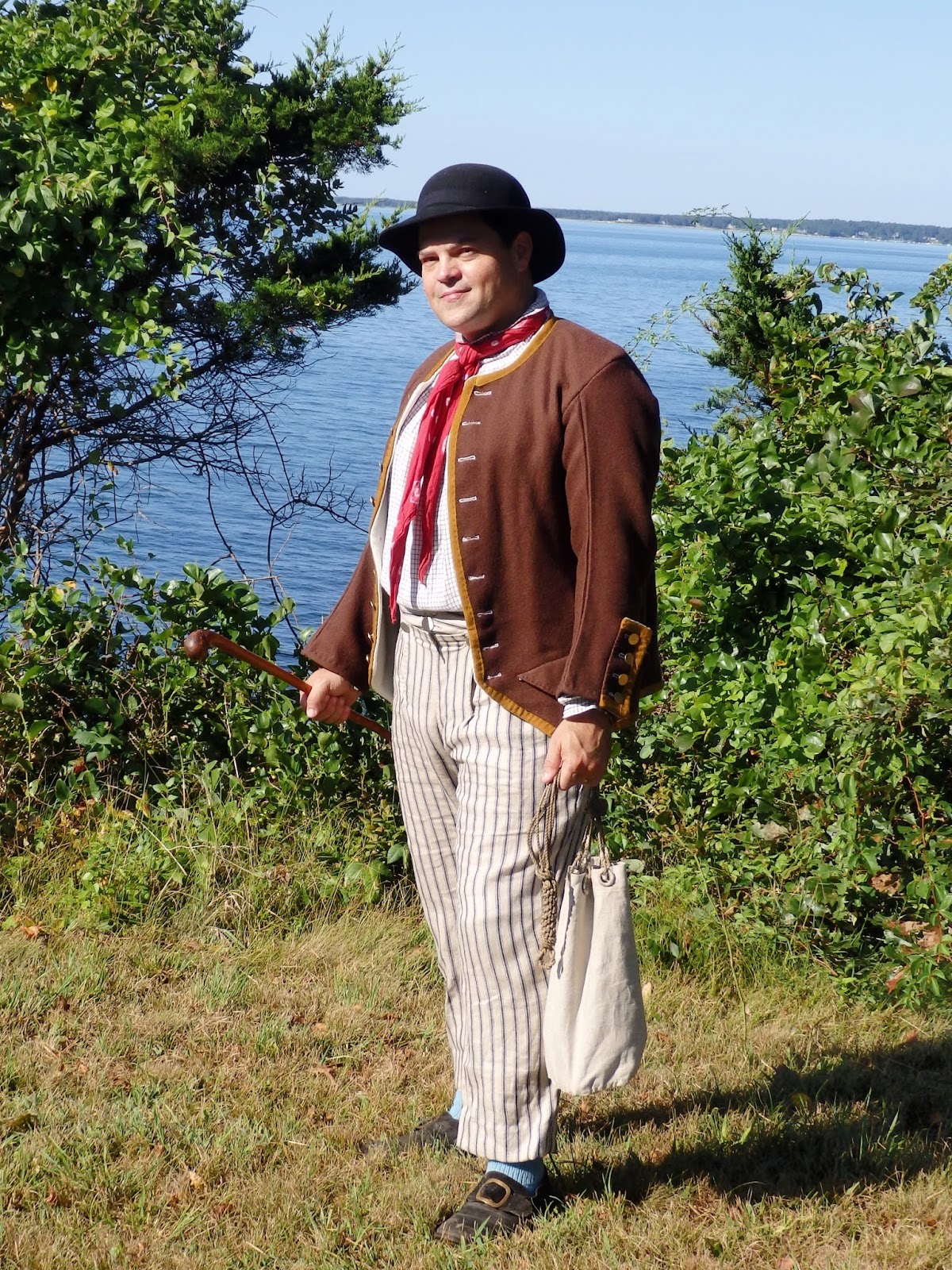
I am fortunate to have been offered the chance to depict Samuel Gray during next month's annual reenactment of the Boston Massacre.  Meticulous scholarship on the part of the organizers - a true labor of love - has gone into making this annual interpretive event a faithful and authentic representation of the actual participants and their actions on March 5th, 1770. 

Samuel Gray was one of the members of the crowd, gathering on King-street that night, who was subsequently killed when soldiers of the 29th Regiment of Foot opened fire.  As such, he became a central actor in the story of the Massacre and its retelling, to be upheld by contemporary patriots as an early martyr to the cause of American liberty.

Boston Gazette and Country Journal, Monday March 12, 1770
Along with Gray, two other men were killed outright and eight more wounded (two of them mortally). Chances are, unless you have made a particular study of it, the one name that is familiar to you is Crispus Attucks, whose memory as an historic figure of African (and Natick Native American) descent would have particular relevance and significance for later generations. Gray and the other casualties, though, have generally faded from modern memory.

His part in the script is simple enough. Gray arrives on the scene just minutes before the soldiers fire, speaks a few words to one of the Town watchmen, folds his arms to warm his hands, and is shot in the head at close range when the first muskets go off. There is good evidence to support this narrative trajectory and the organizers have made a defensible interpretive choice.  Yet there could have been alternative interpretations based on other conflicting accounts.  

Detail from a Jonathan Mulliken engraving, after Revere
Because Samuel Gray was slain that night, there is a considerable amount of near-contemporaneous documentation - largely in the form of depositions and transcripts of sworn trial testimony - that concerns him personally. The murder charge brought against the soldiers of the guard hinged, in part, on whether Gray was targeted deliberately and also whether he offered sufficient provocation for their actions to constitute self defense. Not surprisingly, the evidence on these points offered by witnesses for the prosecution is contradicted by other witnesses for the defense.

Such accounts require critical assessment and have implications for historical interpretation.  Often it is a question of understanding what the surviving documentation helps to clarify and when additional confirmation is needed before a fact can be asserted with confidence.  Regarding the earliest published images of the Massacre, one of the organizers of the event advised me in a personal communication;

"Pelham and Revere shouldn't be taken as an exact representation. But I do very strongly believe that they can both be counted on for what clothing looked like in 1770."


Next month's Boston Massacre reenactment is not "The Samuel Gray Show".   Be that as it may, the actor in me needs to understand the motivation and backstory of my character, while  the historian in me cannot resist digging deeper into the evidence.  To do my part with fidelity and to remain in character when interpreting for the public, there are some questions about Samuel Gray's background, what he may have worn, and his activities both prior to March 5th and also on the night that he lost his life that need to be considered.  We will discuss and evaluate the available evidence that may help provide some answers in subsequent posts.

Wednesday, February 3, 2016

What's In My (Conjectural) 18th Century Sailor's Ditty Bag?

1774 watercolor by 2nd Lt. Gabriel Bray of the 44-gun "Pallas", Captain the Hon. William Cornwallis commanding
The hand tools of the rigger and sail maker remained remarkably similar from the mid -18th century to the dawn of the 20th.  The industrial revolution would eventually produce innovations in cotton sailcloth manufacture, machine sewing and metal grommet construction.  The folk art embellishments found on some of the items used by sailors on wooden ships unquestionably reached their highest artistic development during the 1800s.  Nonetheless, the basic tools of the sailor, the materials from which they were made, and their general forms and functions, carried right through this last great age of sail.

My reconstructed ditty bag with antique, original sailor items
A sailor kept a variety of small tools and personal items in his ditty bag.  Most of these tools were primitive but highly functional - even quite beautiful -  and often made by the same individual who used them.  Some, like seam rubbers and serving mallets, had highly specialized uses for sail making or  rigging, while others were more versatile.  I carry tools for both of these shipboard occupations in my ditty bag.

Selecting the right contents for my conjectural 18th-century sailor's ditty bag required additional research.  This was less a question of identifying the sail making and rigging tools typically used by sailors on wooden ships and carried in their  ditty bags or other small containers, but of what forms and designs were appropriate for the mid to late 18th century.  There is also the considerable challenge of finding original items, or fabricating new ones, that are appropriate for this earlier era even if of a later provenance.  Some are rare, some are quite expensive, and most of these nautical antiques on the market today date from the 19th rather than 18th century.

19th century Ditty Bag and contents: Southold Historical Society, Long Island

Ditty Bag and contents: Maine Maritime Museum, Topsham ME

Later Ditty Bag and contents, Mystic Seaport Museum
During the 18th and early 19th centuries, most of the tools or containers carried in a sailor's bag were made from organic materials - hardwoods, bone, horn, leather and hemp.  Aside from the legal and ethical issues associated with ivory possession today, sailor tools or boxes made from whalebone would have been extremely uncommon in the American merchant service between 1760-1780, except perhaps from Nantucket with its advanced and specialized whale oil economy. Metals such as iron and high carbon steel, highly vulnerable to the effects of oxidation in the marine environment, had limited application for needles, forged hooks and knives.  Tin or brass may also have been used for the thimbles of leather palms in this period, as they would be later.

Here is a brief summary of the smaller sailor tools that were likely in use during in the period of my merchant sailor impression between 1760-1780, and images of what I currently carry in my ditty bag:

Fids & Bodkins

Wooden or bone fids and bodkins are nearly always among the contents of old ditty bags.  Fids are  blunt tipped cones of various lengths, usually lathe turned, and used to separate rope stands or "marl" when splicing. Usually these are of wood, though later they were sometimes made of whalebone. I have a plain, 12" vintage hardwood fid  in my ditty bag.

vintage hardwood fid, modern bovine bone bodkin, modern beeswax square
Iron marlinespikes, used for the same purpose as fids, are documented in mid-19th century nautical collections and might also date from this early period - the word came to recorded English in the early 17th century - but from a practical standpoint they are apt to punch through all but the heaviest canvas ditty bags so I have neatly sidestepped the question of their definitive provenance for this impression.  They became much more common as steel cables and ultimately synthetics replaced hemp fiber rope.

Bodkins are very small awls made of bone or pointed wood  that are used for needle hitching and other fine sewing and splicing tasks. Riggers made use of them and probably sail makers as well.  I have a very small bodkin of modern manufacture made from cow bone which was very useful in splicing hemp cord marline through ditty bag grommets.

modern 3" bovine bone fid
Needles & Needle Cases
My original, hitched needle case with its curved needle and a more recent one
(from Vinalhaven, Maine)
Iron and later steel needles were indispensable at sea. Steel needles used for sail making today have tapered and flattened ends and very sharp points for piercing heavy canvas: mine are from Wm. Smith & Son, Reddich, England.   Sail maker's needles come in different sizes and some historic examples are also curved, such as the one in the image, above that came with the needle case.  I'm not sure which of these innovations might have been available to sail makers in the 1760-1780 era and have not made a comprehensive study of them. 

Keeping needles in a rust and mildew proof container was essential at sea, and there were several types of these used during the last great age of sail.  Probably among the oldest, but used by sail makers right into the 20th century, was the grease horn.  these were tips of ox horn, sometimes with a small leather thong to attach it to a sail maker's bench, containing iron needles impaled in tallow.  These are more practical for use on land but are sometimes found in association with ditty bags.  My original horn with its tallow and needles may be seen in the image of my ditty bag contents at the top of this post.

The other type consist of hollowed out wooden tubes with fitted end caps, usually lathe turned and sometimes covered in needle grafted or hitched  macrame twine coated with tar.  I own two antique examples, one of each style, though I believe the style unhitched wooden needle case is more appropriate from the mid 19th century on based on.  While they were in concurrent use during much of the 19th century, there is provenance for a needle hitched cane needle case dating from the very early 1800s and possibly earlier.  More recent examples are hitched in cotton twine rather than linen or hemp, but it is very hard to tell the difference under the tar.  Mine is an unusual variant with a wider area of decorative needle grafted macrame below the hand whittled end cap, and comes from an old collection in Vinalhaven, Maine.  It is much larger than the mid to late 19th century example of a turned and decorated wooden needle case, also pictured below.  For my 1760-1780 impression, the larger needle hitched one is probably as good as it it gets.

original needle cases

Cord, Twine and Beeswax

modern 4mm tarred hemp marline and hemp sail twine
Cordage and seaming twine suitable for this era should be made of hemp.  I found modern suppliers for both. I carry small diameter (4mm) tarred hemp marlin provided by American Rope & Tar LLC in my ditty bag to worm rigging and for decorative knotwork like the three-strand Turk's Head knot in the image, above.   Hemp seaming twine requires wax, the same as for lighter linen thread, and for this there is beeswax.  I have a modern cake of beeswax but am anticipating delivery of an old and well used vintage piece from a nautical collection. 

I do love the smell of the Stockholm tar that was used for my tarred marline.  You can also buy tarred seaming twine, but it has a burnt, acrid smell and is extremely sticky. I have a ball of both types of twine from R&W Rope, but keep the tarred stuff in its own little bag.

Seaming and Rigger's Palms

A leather palm with a rawhide or metal thimble was a requirement for cordwainers and other leather
two vintage seaming palms
workers as well as for sail makers and riggers to protect their hands when pressing needles through thick materials. The same basic style of seaming palm was used interchangeably among the leather working and sail making professions, but riggers eventually developed a specialized palm that more fully protected the thumb. The contents of antique ditty bags almost always include palms, sometimes several of them. I have two vintage seaming palms that probably date from the late 19th or early 20th century (shown at right).  The larger one with a brass thimble came from a nautical collection in England, and one with a thick leather covered thimble came from the West Coast of the US. 18th century palms may have been of an even simpler, primitive style than these examples, but they will do until I can find better documentation for them.
Bench Hooks

19th century (1845) fixed sail maker's bench hook with a fixed eye

The sail maker needed to keep the canvas taught when sewing with needle and palm, and his "third hand" was a tool known as a bench hook or sail hook.  This was an iron hook with a narrow, sometimes even scorpion-tailed tip, and was attached by a hemp cord to the workbench or another item well fixed in place and so the sailcloth could be pulled tight without piercing it.  I have seen 19th century examples with two basic eye forms.  The one pictured at left dates from 1845 and is part of my collection.  It comes from southwest England and has a simple, fixed eye.  The other type has a swivel so the sail maker can turn the canvas without needing to reset the hook.  Vintage examples of these mundane but necessary tools of the sail maker's trade are extremely rare today and I was fortunate to acquire my two bench hooks even with their mid-19th century provenance.  One has a swivel and one is fixed.

Rigging / Sail Maker's Knives & Sailor's Clasp Knives

The knives used by riggers and sail makers do not have narrow points. The older ones have either squared tips or sheepsfoot blades, ideal for cutting heavy canvas without tearing.  One modern maker contends that that spine should be left unhardened so that it can absorb the blows of a mallet, but others familiar with 18th century metallurgy remain unconvinced.  Ward Oles of At The Eastern Door tells me; " A properly forged knife with an equally appropriate drawn temper should take not only the repeated blows of a mallet but also resist deformation, especially with a heavy 1/4" spine."

Before they were made produced and purpose made in places like Sheffield, England, rigging knives

Asian fishing knife
were often sailor fashioned, and could be a simple as a cut down knife blade with a wooden handle.  There are 19th century examples with hemp twine fancywork either hitched or grafted over the handles.  I do not own one of these, yet, but if I master the art of needle grafting, I'll probably make one for myself.

Caution: I picked up  the antique iron friction folding knife (at right) that is sometimes described in online auctions as dating from the 18th century. It is actually a Asian peasant's fishing knife,  used for mending nets.  Not sure if it originates in China or SE Asia, but regardless it does not have a plausible application for my 18th century American nautical impression.

Serving Mallets and Serving Boards
Serving mallet
"Worm  and parcel with the lay / Turn and Serve the other Way"   

Natural rope fibers are vulnerable to rot, a particular problem for a sailing vessel's standing rigging that is constantly exposed to the elements.  The solution was to treat the rigging so that water was unable to penetrate between the strands of the big cables.  Smaller diameter strands were "wormed" between the marl so the rigging diameter became cylindrical, then wrapped in the same direction - with the lay - with strips of tarred canvas. This was secured by "serving" small diameter marline as tight as possible all the way down the cable in the opposite direction.  The tools used to serve the large diameter rigging were known as serving mallets and were almost always made of hardwoods.  Over time the groove in the side of the mallet would become worn down from constant abrading against the wrapped rigging, with well used examples appearing almost crescent shaped in profile.  The marline would also wear grooves in the mallet on either side of the handle.  I have a vintage serving mallet that shows very little wear at all, and it is too large to fit in my ditty bag.

For smaller diameter rope there were serving boards made from a single piece of hardwood (or whale
lignum vitae serving mallet and mahogany seam rubber
bone) with a curved, almost scooped head.  Later examples sometimes have offset scoops, or reels attached to the handle to hold the serving line.  Mine is older and sourced from southwest England.  It is made of lignum vitae, among the hardest and densest grained of all hardwoods.  Here it is, at right, along with the prize artifact in my collection...a mahogany seam rubber

Seam Rubbers

Creasing a seam in heavy canvas or leather required pressing with something strong and easy to hold inn the hand that would neither tear the material nor crack under strain.  A sail maker would do this with a hardwood (or whale bone) tool that came to be known as a seam rubber.  The earliest ones were very basic tools, just a wedge of hardwood with a blunt edge, but by the 19th century there were becoming increasingly elaborate and some are masterful works of folk art. These are highly collectible and you are lucky if you can find an original for less than a new car payment. Mine came from Westport, Massachusetts and my car has not been repossessed. It is made of mahogany, a 6" long with a 2" wedge that curves at the base to form two hearts at the sides. The handle tapers from the middle and the geometric pummel is known as a chamfered cube.


A final note of caution:  There is much in this post, and the one preceding it, that remains conjectural for the mid to late 18th century.  Early ditty bags of  incontrovertible provenance remain elusive and it is possible that they came into use several decades after the period of my maritime seaman's impression (1760-1780).  Likewise, some of the hand tools used by sailors became more refined during the 19th century and may have been more primitive than some of what I've managed to collect.  My seam rubber may be too pretty for the late 18th.  Then again, perhaps it is fine.  The agnostic historian will opt for omission in the absence of definitive evidence.

These are valid areas for further inquiry.  On the other hand, this collection also provides me with opportunities for historical interpretation in appropriate settings, and teaching moments matter.

from The Elements and Practice of Rigging And Seamanship, 1794, by David Steel

Reconstructed 18th Century Sailor's Ditty Bag


American 18th century Ditty Bag
linen with hemp lanyard
I wanted to inhabit my 1760-1780 American merchant seaman's impression more fully than just wearing the period-appropriate clothing I had researched and documented for it.   Lacking a berth on an appropriate vessel, and without the time, resources and youthful audacity to devote to months at sea,  I decided to concentrate on certain elements of marlinespike seamanship that I could practice at home.  I elected to begin with construction of an 18th century sailor's ditty bag, complete with fancy work lanyard knotted in hemp marline, and started collecting suitable items as its contents for use during historical interpretation.

The ditty bag was the nautical equivalent of the long hunter's "possibles bag": a container for keeping near to hand the small gear and personal items that were needed on a daily basis.  The artifact pictured at left that sold at auction in 2010 was identified as an American 18th century ditty bag.  Its construction is typical of ditty bags made before the mid-19th century, after which cotton canvas replaced linen, and metal grommets were used instead of those made by hand from strands of hemp line.  Some ditty bags today  -  more likely to be employed as wine caddies than for seamanship - feature roped bottoms that are flat instead of rounded, but these are modern innovations.   

Analysis of surviving, early ditty bags in museum collections, along with images contained in records of private sales, indicates some variation in the smaller details of construction, such as bag diameter, lanyard length and number of strands, but they are closely related in most other respects.  The main components of such ditty bags are:

- an open, cylindrical linen canvas bag, between 5" and 7" in diameter and 16" - 20" deep,  with hand
early ditty bag without its lanyard
stitched, flat seams and a round bottom;

-  small grommets made from spliced, small diameter hemp cord marline, hand stitched in linen thread or hemp sail twine;

- a lanyard also made from hemp marline, usually tarred, comprising anything between four and twelve strands, with a loop at the end so that the bag could hang from a hammock hook when not in use.  The lanyard is usually attached to the bag by splicing loops through the grommets.  It could be quite rudimentary, or feature a number of fancywork knots that showcased the sailor's skills.  I am by no means an expert at knot identification, but the 8 strand example, above, seems to employ a double chain sennet and two stopper knots for the handle with a running Turk's Head for the closure. Only the knotted portions have been tarred or varnished in this particular lanyard.

For my 18th century reconstruction, I opted for a linen canvas ditty bag 7" in diameter and 18" deep, following the diagram, provided by Master Sailmaker Louis Bartos of MARINER SAILS in Ketchikan, Alaska.

Ditty Bag Construction Diagram courtesy Louis Bartos of Mariner Sails
4mm tarred hemp marline formed the grommets, which I hand worked with the same waxed linen twine I  used to sew the bag. The next one I make will be sewn with a thicker hemp sail twine, but otherwise I am quite pleased with the results.

I used a #13 sail maker's needle from Wm. Smith & Sons and found it pierced my line canvas easily. It was, as they say in Southeastern New England, "wickid shahp".

I followed the instructions provided by Hervey Smith in his estimable book The Marlinspike Sailor and used three 7' doubled strands to form a six strand lanyard.

Based on Smith's instructions, and a number of helpful YouTube tutorials geared primarily at the para-cord knotting set, I  taught myself how to tie the various lanyard knots.  I began with a simple sennet or braid in the middle of the three strands, then "clapped a seizing" around it with twine to form a loop from the bight.  Below that I tied the first stopper knot, of a sort known since the early 19th century as Matthew Walker's Knot.  It is described as such in Darcy Lever's (1808) The Young Sea Officer's Sheet Anchor: Or a Key to the Leading of Rigging and to Practical Seamanship; and I'd lay you long odds that the stopper knots in the 18th century ditty bag lanyard, above, are evidence that it was in use during the previous century.  It can be made with various numbers of strands, and my lanyard has two of them made with six strands on either end of the handle.  Finishing these knots required a small fid to take in the slack (more on these tools, below).

In between the Matthew Walker's knots I placed an alternating series of round crown sennets: first laid clockwise and then counter. I found it was easier at this stage to stick a large fid through the lanyard loop and then lay the strands out in wide bights before drawing them tight. The result is a very satisfying handle with 14 alternating round crown sennet knots.

The lanyard in progress, with alternating round crown sennets
formed below a Matthew Walker's knot

The finished lanyard handle

A 3 strand running Turks Head knot closes the bag

I went with a running Turks Head to draw the strands of the bag closed once these had been spliced through the grommets.  The first one I made was a double strand Turk's Head which I varnished as the various manuals recommend, but tarred marline really doesn't need varnish and I replaced it with a three Strand Turks Head which I like much better.   This is a fun knot to tie, and a large fid proved to be an excellent form for reducing the size of the knot by pushing it closer to the tip each time I took in the slack.  The key to this knot is retracing, and it took more than 4' of marline to make a three stand knot the size I was looking for.  I just tucked in the ends and pressed it to finish and it has not slipped or unraveled yet.  I think I could have taken the slack in just a bit more in places but knotting my first ever lanyard gave me a great deal of satisfaction.


The finished ditty bag has served me well.  It is a popular ditty bag pattern that, except for the materials used,  has remained little changed during the last 2 centuries.  I'll discuss the tools and personal items I researched and acquired to carry in it in a subsequent post.

Reconstructed 18th Century Sailor's Ditty Bag
made by Tim Abbott from linen canvas and tarred hemp marline