Showing posts with label Buttons. Show all posts

Wednesday, January 20, 2016

Documentation and Reconstruction of a Hybrid Style Double Breasted Waistcoat in Striped Calamanco


I'm collaborating with a fine tailor, Patrick Eckelmann, on a new 18th century waistcoat project. What I have in mind is a hybrid waistcoat that features both single and double breasted elements. It will feature a wonderful historic textile known as striped calamanco that is virtually unrepresented in the reenacting community, and the garment when finished will be suitable for several 1760s-1770s impressions.

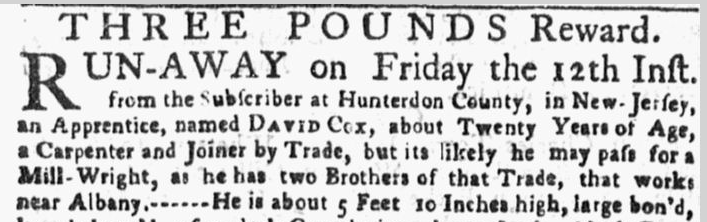
While double breasted waistcoats fully came into their own after 1780, they were by no means unknown in prior decades. Examination of NJ runaway descriptions from period newspapers in the decade between between 1768 and 1777 reveals quite a number of individuals who wore double breasted jackets, waistcoats and vests in a variety of fabrics, as the following excerpts illustrate:

“ [1768] a double breasted swanskin jacket with black spots, and brown mohair buttons”
“[1769] two striped jackets, one of which is double breasted, without sleeves”
“[1769] a blue and white homespun striped double breasted under jacket without sleeves”
“[1770] blue double breasted [jacket], without sleeves, or lining, metal buttons”
“[1771] two snuff coloured cloth jackets, the under one short, double breasted”
“[1772] a blue double breasted vest”
“[1772] a striped Bengal jacket, double breasted”
“[1772] a cotton and worsted double breasted jacket”
“[1773] lincey Woolsey [vest] , double breasted, of a reddish colour”
“[1773] a red vest without sleeves, double breasted”
“[1775] a light coloured new double breasted under jacket, of fulled lincey”
“[1777] a blue double breasted jacket”


Occasionally such descriptions also contain references to a distinctive cut or construction:

“[1773] double breasted [jacket] , the fore parts red nap, the back parts striped lincey”
“[1773] a short lightish double breasted under jacket with metal buttons and no skirts”
“[1774] a red frize waistcoat double breasted, with pewter buttons on one side and none on the other”


There are also references to waistcoats and jackets made with calamanco, including “a striped calamanco jacket” and “a calimancoe striped waistcoat, with a number of small buttons”: both worn by Irish servant runaways in 1773. Another runaway in 1776 wore "a sleeveless jacket, with the fore parts of red serge, the back parts calamanco”

During the second half of the 18th century, calamanco was a thin worsted fabric, often striped in multiple colors but sometimes also checked, damasked, or with a satin weave. Norwich, England was famous for it.

The striped calamanco cloth that I have located for this reconstruction is a 17" by 60" bolt of fabric made by Eaton Hill Textile Works, and is closely matched to an 18th century example. It has stripes in several widths and arrangements and features an astonishing eight colors, including red, pink, yellow, two shades of green, light brown, black and white.

There is considerable variation in style, construction and fabric in contemporary runaway descriptions to support a choice of striped calamanco for this waistcoat reconstruction, and also for utilizing a different fabric for the back parts if there is not enough calamanco material for the entire waistcoat. Likewise, while small buttons covered in the same fabric as the front waistcoat panels are an appropriate choice, there is enough variation in the button descriptions in these runaway descriptions to support other options.

Regarding the pattern of the waistcoat itself, while general trends in double breasted waistcoat construction are discernible from 1750 to 1780, there is far more variety in the available documentation than might at first be suspected, and there are still exceptions to every rule. One of the earliest contemporary images of a sailor wearing a double breasted waistcoat, for example is the sketch (at left) held in the collections of the National Maritime Museum (UK). The central figure is a Scottish Captain whose underjacket appears to have no skirts and has a narrow distance between the paired rows of buttons. This is thought quite typical of such waistcoats from the 1780s onward, yet this sketch is thought to date from about 1750.


A second portrait from the same time period (below, at left) shows a gentleman in hunting dress wearing a double breasted striped waistcoat. The subject was a Welshman and President of the Society of Sea Sergeants. His collared double breasted waistcoat with flap pockets and cutaway skirts has small self covered buttons, with a single, third button in the center to close the two bottom halves and perhaps one as well at the collar. The stripes in this case are lateral.

Gwynne’s waistcoat is an early example of a variation of the double breasted style dating from at least the 1750s. It is actually a hybrid with both single and double breasted elements. Typically one or more of the bottom buttons on such waistcoats were single breasted, with those above arranged in two, widely spaced double rows. This button configuration is similar to those found on regimental coats of the 1750s but usually these waistcoats are without lapels.

The hybrid waistcoat style seems to have been popular with

sporting gentlemen like Gwynne based on surviving portraits of the period, but there is variation even among these examples, with skirts of different cuts and lengths and different numbers of single buttons below the double rows. The example at right depicting a gentleman named Francis Burdett dates from 1762-1763 and is one of a series of portraits made of fellow members of the Markeaton Hunt during this time by portrait painter Joseph Wright of Derby. Burdett's waistcoat is typical of the rest worn by his hunting companions: a hybrid with long skirts that are either squared in the typical 1750s style or just slightly cutaway. It is unlined, with two self covered buttons that close the bottom of the waistcoat and a wide double row of small buttons above.

There is actually a surviving example of a hybrid waistcoat from the collections of Snowhill Manor in Gloucestershire that dates from the 1760s.

It is made of red, yellow, cream and blue silk, lined with natural linen, and fastens with small flat self covered buttons. The fore parts are striped while the back parts are solid. The skirts are shorter and appear to be more cut away in the fashion that became popular in the 1770s. The pocket flaps lack button closures.

Although the images below may be reversed, it appears that this double breasted waistcoat was designed to fasten over the left row of buttons rather than the right. The rows also curve slightly inward as they rise toward the center and then curve out again as the approach the shoulders. There are four small buttons that close the bottom, single breasted portion of the waistcoat, and one that closes the neck. It has false side vents and a true back vent.


This waistcoat provides the template for the major design elements of our hybrid waistcoat reconstruction:

· - The front panels will be vertically striped calamanco, while the back panels may be white
    serge.
· - It will have two rows of 9 or 10 rather than 11 small self covered or thread covered
    buttons per row, arranged in a slight curve.
· - It will have at least three small buttons that close the bottom of the jacket front.
· - It will have short cutaway skirts
· - It will have two scalloped pockets without buttons and no collar.

Unlike this surviving example, the reconstructed hybrid waistcoat will be unlined, and it may either lack or include the top button to close the neck at the tailor’s discretion. Instead of silk and linen, it will be constructed of worsted calamanco and serge. It will not be reversible; that is, it will only button on one side, and it will button on the right rather than on the left.

When it is finished, this striped calamanco and serge hybrid waistcoat ought to work nicely for several of my historical impressions, including that of a 1760-1780 American merchant seaman, among whom striped waistcoats were a popular choice. I could see it working as part of my 1758 New Jersey Provincial Regiment impression as well, for no waistcoats were issued to this unit in that year and soldiers who had them would have likely worn civilian ones. It might likewise do for an early Revolutionary War American militia or even Continental Army impression, especially those units where a wide array of civilian coats were collected and distributed to soldiers. The greatest challenge may not be finding an appropriate, documented use for this 18th century garment, but reconciling its bold stripes and array of colors with the fashion sensibilities of our own era.

When it is ready, I will of course post pictures. I hope to have it available for this year's Boston Massacre. If so, look for me among the angry sailors.

Thursday, March 26, 2015

Button, Button, Who's Got the Wooden Buttons?

It is difficult for an historian to generalize about the folkways of colonial New Jersey, with its two Provinces, East and West, and distinct populations of Dutch, German, Swedish, English, Scottish, Irish, African and Native American origins.  Add to that the Quaker influence in West New Jersey, and divided  Dutch Reformed congregations in East, and the overall demographic impression in the years leading up to the American Revolution is of a remarkably heterogeneous society with sub-regional characteristics and a solid middle class.

There is the odd reference in a traveler's letter to respectable Jersey women who sewed in their shifts.1

Cyder spirits such as "Jersey Lightning" or Apple Jack would be a strong candidate for the regional alcoholic beverage of the era.  Still, there is not much else that would support an endemic material culture in colonial New Jersey in the 1770s distinct from that of the wider Delaware Valley in the West, or New York and the Hudson Valley in the East.  Fully half the breeches described in New Jersey runaway notices in period newspapers were made of leather, but this was a common working class garment in other colonies.  Short gowns may have been more common in the Middle Colonies than in the Eastern ones, but not just in New Jersey.

Whenever I do come across a contemporary reference that seems to make a general claim about colonial New Jersey's material culture, I look for evidence to substantiate or refute it.  Consider this fascinating newspaper advertizement from 1770:

                Benjamin Randolph
                takes this method to inform his customers, and the public
                in general, That he has for sale, at his ware room of
                carving and cabinet work &c., at the Sign of the Golden Eagle,
                in Chestnut-street, a quantity of Wooden buttons, of various
                sorts, and intends, if encouraged, to keep a general
                assortment of them...The people of New-Jersey (in general)
                wear no other kind of buttons, and say they are the best and
                cheapest, can be bought, both for strength and beauty, and
                he doubts not that they will soon recommend themselves to
                the public in general.

                                             [The Pennsylvania Gazette Jan. 18, 1770]

Benjamin Randolph
by Charles Willson Peale
(Philadelphia Museum of Art)
Mr. Randolph was born to a Quaker family in Monmouth County, New Jersey and had set up business in Philadelphia.  He seems to be pitching his buttons to the West-New Jersey market, or perhaps also to customers in Philadelphia with a cultural or religious affinity for those on the far shore of the Delaware.  Another ad that year reportedly described his desire to purchase "apple, holly and laurel wood, hard and clear-grained" for button manufacture. 

Was he right that "The people of New-Jersey (in general) wear no other kind of buttons", or was he inflating their generality to build a new customer base, and perhaps also to appeal to domestic purchasing impulses while many British goods, including gold and silver buttons, were subject to non-importation embargo?

One place to look for verification of the wooden button claim would be those New Jersey runaway descriptions in contemporary newspapers (albeit that until 1778 all of these were published outside New Jersey).  At least for the lower third of society, these notices of absconded apprentices, prisoners, servants and slaves should provide a useful way to compare button descriptions for evidence of any discernible trends. 

As it happens, I can run that analysis, for I have been compiling a database that currently has 627 individual male New Jersey runaways with clothing descriptions between the years 1767 and 1782.  My sources are those colonial and revolutionary-era newspapers from which extracts were transcribed and published in multiple volumes of the New Jersey Archives between the late 1880s and the First World War.  The volume that covers late 1774 through 1775 contains incomplete transcriptions and substitutes ellipses for clothing descriptions for all but nine runaway notices, but the other years appear to be faithful and comprehensive reproductions of the 18th century text.


There are 142 button descriptions among the clothes worn by these 627 men that offer insight into the materials from which there were made.  Five of these are military uniform buttons (one worn by an escaped slave), leaving 137 that could conceivably represent lower class clothing worn in New Jersey during this time. 

Buttons (sometimes their notable absence) are only described for visible outer clothing - surtouts, coats, jackets and breeches.  These runaway notices tell us virtually nothing about shirt buttons, most commonly made of thread.  It is possible that only those articles of clothing that were clearly seen and well known to the subscriber were described right down to the buttons.  It is also possible that only buttons considered unusual or distinctive were included in the descriptions.  It is prudent to bear these alternative hypotheses and qualifications in mind as we examine the evidence.

Among these 137 button descriptions, I find 15 that are wooden buttons, including one fellow who wore a suit of clothes with wooden buttons on both the coat and jacket.  I also find 25 simply described as metal, and another 28 that were either white metal or pewter.  There were mohair or thread basket  buttons (13 and 6, respectively, although some of the latter may have been metal), as well as 10 brass and 8 more of yellow metal.  There were 9 references to horn, and 8 to covered buttons, though the latter could be under represented as most of these were the same color fabric as the clothing and might not have been readily discernible.  There are handful of other types of button mentioned with low representation (bone, tortoiseshell, glass, composite materials, gilt) and even one described as "Philadelphia buttons", made by one of the two local manufacturers of metal buttons in that City.

Wooden buttons, it seems, were worn by these New Jersey runaways  slightly more than some other common types but considerably less than white metal.  Even if we sorted these 15 references to wooden buttons by East and West New Jersey and compared them to other button types found on runaways from these places, it is unlikely that there would be a strong enough correlation  to back up Mr. Randolph's claim of general use.  One could further speculate that wooden buttons could have been favored by some rural Quakers in plain dress, but simple white metal cloth covered buttons were also available to them.

The most interesting conclusion from the New Jersey Runaway descriptions is not that wooden buttons were the norm, but that nearly two dozen different types of civilian button were described, some in sufficient quantities to be considered something more than rare occurrences.  Noting once again that cloth covered buttons may be under counted in these descriptions, there is much to suggest that white metal, mohair, brass, and, yes, wooden buttons were regularly worn by the lower classes in New Jersey at this time.  Perhaps the market was not as great as Mr. Randolph imagined or hoped might come to be, but there was a market nonetheless.

Benjamin Randolph went on to serve in the First Philadelphia  City Troop of horse at Trenton and Princeton in 1777, but today he is better known as a  talented colonial furniture and cabinet maker.  Thomas Jefferson's writing desk - the one on which he drafted the Declaration of Independence - is thought to have been made in May, 1776, by Benjamin Randolph.

________________________1.  De Pauw, Linda Grant, Fortunes of War: New Jersey Women and the American Revolution (Trenton, NJ, 1975).