 |
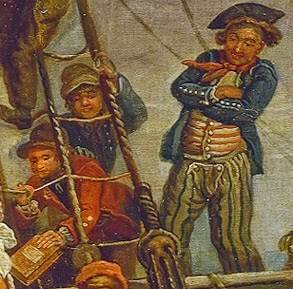
| Detail from The Embarkation by John Collett, circa 1760s, Nation Maritime Museum (UK) |
A detailed, ongoing study of documentation for sailor clothing of the period can be found at the excellent British Tars blog, and there has been fine research as well by such living history groups as Munro's Battoe- men and H.M.S. Somerset.
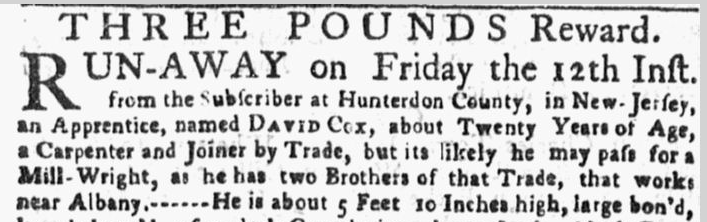
To add to this body of knowledge, I have analyzed colonial and revolutionary era newspaper references to sailor clothing between 1734 and 1782 as compiled and recorded in the New Jersey Archives. I offer here a short assessment of these data, followed by every clothing description listed by year.
Blue was the most common, but by no means the only sailor jacket color. There are 16 references to blue sailor's jackets, most of which date from the mid 1760s or later. There are also five references to brown sailor jackets, only one of which from the revolutionary-era. There are four green, four light coloured, two black, two grey or lead coloured, one snuff-coloured, two that were either striped or spotted, one dark coloured, one black and blue and one striped red and white.
Men from the same ship sometimes wore clothing of the same color and material provided from the ship's store. In 1766 two murderers wore "light coloured sailor's jackets lined with white", while in 1763 six Scotsmen who had recently been transported from Leith on the Ship Boyd, Captain Dunlop, subsequently ran away taking with them "sailor's new short blue jackets, lined with white flannel." Five men who ran from the Hannah, James Mitchell, Master, in August 1773 were wearing very poor and ragged clothing, but one is described as an apprentice and the others are unlikely to have been sailors, for the overcrowded Hannah had just crossed from Londonderry to Philadelphia with 520 Irish passengers.
 |
| Men Loading a Boat With Barrels by Samuel Scott (1702-1772) Yale Center for British Art |
There were no Pea Coats, but there were Pea Jackets. Possibly derived from the Dutch or Frisian "pijjekker" meaning a coarse cloth jacket, pea jackets have been associated with American and European sailors for centuries, first referenced in the Boston Gazette in 1720. The earliest reference to sailor clothing in my New Jersey study is to "an old sea-pea jacket, lined with red, and the skirts somewhat cattle eaten" worn by a runaway in 1734. Two more references in the 1740s describe pea jackets and they continue to appear in these records through 1772. There are nine in all. How a pea jacket at this time differed from a sailor's jacket is not apparent from the newspaper ads, nor whether they were broad lapelled and double breasted as was typical of later Pea Coats. One runaway servant in 1772 wore a long surtout over his pea jacket. They are described in many different colors, but the only reference to cloth is a "dark kersey pea jacket, without lining."
 | |
| The Sailmaker ticketing the hammocks on board [the Frigate] Pallas by Gabriel Bray, November, 1774, National Maritime Museum (UK) |
Other items of distinctive sailor dress are infrequently mentioned. Since most of the newspaper ads in this study describe runaways who happened to be wearing sailor's jackets but were in service on land, caution is needed when assessing their other clothing as indicative of nautical wear. Three wore "sailor trowsers", one described in 1751 as wide sailor trowsers and fustian breeches under them. The two murderous sailors who waylaid a man on the road in 1766 left behind their incriminating clothes: "one shirt and sailor's frock, both bloody, two pair of trowsers, one bloody, and two small marling spikes". In 1768 A horse thief in a sailor jacket wore "long striped Cotton trowsers" and was described as having served on a man of war.
There are just a couple of references to caps or hats. Two of the hats have bound edges, one that is probably not cocked, and another very unusual one worn by a slave from Barbados in 1769 who was apprehended in seafaring dress wearing "a white hat with red lining, yellow loop and button." Two men wore caps - one of the murderers in 1766 had on "a sailor's cap", and an Irish servant in 1768 who wore "a regimental cap turned up with red".
There are plenty of watermen in these NJ runaway ads who sailed and/or stole boats and wore regular clothing. Any sailor clothing that was described is listed below.
 |
| Scott Lance, Munro's Battoe-men Washington Crossing, 2013 |
Sailor Clothing mentioned in NJ Runaway Ads 1734-1782
1734 an old sea-pea jacket, lined with red, and the skirts somewhat cattle eaten
1742 an old black pea jacket, mohair buttons, lined with white flannel
1744 a dark kersey pea jacket, without lining
1749 Blue Duffield sailor’s jacket, and a striped under jacket
1750 a snuff coloured pea jacket
1751 A brown pea jacket, and a blue one under it..
...wide sailor trowsers and fustian breeches under them
1756 an old bearskin [vest] made sailor fashion, patched on the elbows
1762 a redish brown sailor’s jacket
1763 a kersey sailor’s double breasted jacket, with horn buttons
1763 [a number of] sailors new short blue jackets, lined with white flannel
1764 an old lead coloured pea jacket, pieced on the sides with black
(to make it big enough for him)
1765 a thickset coat, sailor’s trowsers, a great coat, and old hat
1766 [Murderers, two men dressed like sailors]
light coloured sailors jackets, lined with white, the tallest
had a sailor’s cap, the smallest a hat
(leaving in the field one shirt and sailor’s frock, both bloody,
two pair of trowsers, one bloody, and two small marling spikes)
1766 Irish servant an old blue sailor’s jacket, bound with white,
with horn buttons, a red under jacket without sleeves, bound with white
1768 a sailor’s blue waistcoat and under waistcoat, a pair of new buckskin
breeches, new fulled stockings, and a felt hat.
1768 a short blue sailor’s jacket, with the sleeves taken out, blue half thick
trowsers, linen ditto
1768 a sailor’s napped vest
1768 a regimental cap turned up with red, an old brown jacket made
sailor fashion, tow trowsers
1768 black and blue homespun vest, made sailor fashion, slashed sleeves,
lined with flannel, with horn buttons, long striped trowsers
(later described as: a new double breasted jacket, black and blue
broadcloth, with slash sleeves, lined with flannel, and
horn buttons…long stripped Cotton trowsers)
1768 a blue sailor’s jacket
1768 a thick cloth jacket light colour’d, lined with woolen, made sailor fashion
1768 a check shirt and a pair of white tow trowsers, a sailor’s brown jacket,
a streaked vest
1769 a swanskin flannel jacket, made sailor fashion
1768 a sailor’s jacket with lace over the seams
1769 a blue sailor’s jacket, much worn and faded
1769 he was taken up in a seafaring dress, with a white hat, red lining,
yellow loop and button, who says he is a slave of John Christian,
of Bridgetown, Barbados,
1770 coarse light coloured cloth jacket, lined with red, made sailor’s fashion
1771 four sailor jackets, two blue, the others striped or spotted
1771 a large blue sailor jacket, lined with white flannel, somewhat tarry
1771 Green pea jacket and a check shirt
1771 a blue pea jacket
1772 a blue cloath sailor’s jacket
1772 an outside green pea jacket, and a red under one, a long blue
surtout coat, long Oznaburg trowsers, and new shoes, a checked shirt,
a very small rimmed beaver hat, and a Black silk handkerchief
round his neck
1773 two waistcoats, sailor fashion made, one green the other grey
1773 a blue sailor’s jacket
1774 Two green cloth jackets, the upper one a sort of nap, made in the
sailor fashion
1774 one homespun bearskin [ships] black jacket, one light coloured
worsted and wool ditto, no lining in either, two ozenbrigs shirts,
one new, the other half-worn, one pair of old leather breeches,
new tow trowsers, black yarn stockings, two pair of shoes,
about half worn, a good felt hat, almost new, and an old ditto,
has been bound round the brim
1777 a brown sailor jacket, and an under ditto, near the same color,
of German Serge, bound with binding something lighter; homespun
shirt and trowsers, an old castor hat.
1777 a blue jacket made sailor fashion, blue breeches, a round hat
1778 thickset coat, striped linen jacket, sailor’s trowsers and thread stockings
1779 a sailor’s blue jacket and breeches
1780 striped red and white sailor’s outside jacket
1744 a dark kersey pea jacket, without lining
1749 Blue Duffield sailor’s jacket, and a striped under jacket
1750 a snuff coloured pea jacket
1751 A brown pea jacket, and a blue one under it..
...wide sailor trowsers and fustian breeches under them
1756 an old bearskin [vest] made sailor fashion, patched on the elbows
1762 a redish brown sailor’s jacket
1763 a kersey sailor’s double breasted jacket, with horn buttons
1763 [a number of] sailors new short blue jackets, lined with white flannel
1764 an old lead coloured pea jacket, pieced on the sides with black
(to make it big enough for him)
1765 a thickset coat, sailor’s trowsers, a great coat, and old hat
1766 [Murderers, two men dressed like sailors]
light coloured sailors jackets, lined with white, the tallest
had a sailor’s cap, the smallest a hat
(leaving in the field one shirt and sailor’s frock, both bloody,
two pair of trowsers, one bloody, and two small marling spikes)
1766 Irish servant an old blue sailor’s jacket, bound with white,
with horn buttons, a red under jacket without sleeves, bound with white
1768 a sailor’s blue waistcoat and under waistcoat, a pair of new buckskin
breeches, new fulled stockings, and a felt hat.
1768 a short blue sailor’s jacket, with the sleeves taken out, blue half thick
trowsers, linen ditto
1768 a sailor’s napped vest
1768 a regimental cap turned up with red, an old brown jacket made
sailor fashion, tow trowsers
1768 black and blue homespun vest, made sailor fashion, slashed sleeves,
lined with flannel, with horn buttons, long striped trowsers
(later described as: a new double breasted jacket, black and blue
broadcloth, with slash sleeves, lined with flannel, and
horn buttons…long stripped Cotton trowsers)
1768 a blue sailor’s jacket
1768 a thick cloth jacket light colour’d, lined with woolen, made sailor fashion
1768 a check shirt and a pair of white tow trowsers, a sailor’s brown jacket,
a streaked vest
1769 a swanskin flannel jacket, made sailor fashion
1768 a sailor’s jacket with lace over the seams
1769 a blue sailor’s jacket, much worn and faded
1769 he was taken up in a seafaring dress, with a white hat, red lining,
yellow loop and button, who says he is a slave of John Christian,
of Bridgetown, Barbados,
1770 coarse light coloured cloth jacket, lined with red, made sailor’s fashion
1771 four sailor jackets, two blue, the others striped or spotted
1771 a large blue sailor jacket, lined with white flannel, somewhat tarry
1771 Green pea jacket and a check shirt
1771 a blue pea jacket
1772 a blue cloath sailor’s jacket
1772 an outside green pea jacket, and a red under one, a long blue
surtout coat, long Oznaburg trowsers, and new shoes, a checked shirt,
a very small rimmed beaver hat, and a Black silk handkerchief
round his neck
1773 two waistcoats, sailor fashion made, one green the other grey
1773 a blue sailor’s jacket
1774 Two green cloth jackets, the upper one a sort of nap, made in the
sailor fashion
1774 one homespun bearskin [ships] black jacket, one light coloured
worsted and wool ditto, no lining in either, two ozenbrigs shirts,
one new, the other half-worn, one pair of old leather breeches,
new tow trowsers, black yarn stockings, two pair of shoes,
about half worn, a good felt hat, almost new, and an old ditto,
has been bound round the brim
1777 a brown sailor jacket, and an under ditto, near the same color,
of German Serge, bound with binding something lighter; homespun
shirt and trowsers, an old castor hat.
1777 a blue jacket made sailor fashion, blue breeches, a round hat
1778 thickset coat, striped linen jacket, sailor’s trowsers and thread stockings
1779 a sailor’s blue jacket and breeches
1780 striped red and white sailor’s outside jacket